Accountability and transparency
Read the policies, reports, guidance and plans on how we tackle themes, such as addressing racism and mitigating our carbon footprint, on holding to the highest standards of ethics and values in our actions.
How we earn and spend funds
Detailed information about where our funds come from and how they are spent is available in our annual financial and activity reports.
Behavioural commitments
The integrity of our organisation is upheld by the good conduct of each individual staff member, in any location, with full respect for the communities we serve. For us, this means not tolerating any behaviour from our staff that exploits the vulnerability of others, or of employees taking advantage of their position for personal gain.
All MSF staff are expected to abide by the MSF Behavioural Commitments.
Fighting inappropriate behaviour
MSF promotes a working environment free of harassment and abuse.Our leadership has unequivocally committed to fight abuse and harassment, and to reinforce mechanisms and procedures to prevent and address them. All staff are expected to abide by MSF’s Behavioural Commitments and our guiding principles as stipulated in our Charter.
Training related to behaviour and management of abuse are regularly updated and improved. Procedures, including grievance mechanisms, are in place to encourage prevention, detection, reporting, and management of all types of inappropriate behaviour, harassment, and abuse. People, including victims or witnesses in the communities where MSF works, are encouraged to report misconduct to us so that allegations can be properly addressed.
Since 2018, on a yearly basis, MSF reports on the number and broad types of complaints received of abuse and inappropriate behaviour.
Our reporting on abuse and inappropriate behaviour
Tackling racism and discrimination
In July 2020, MSF’s international leadership made a public commitment to tackle discrimination and racism within our organisation.
The Core Executive Committee (Core ExCom) pledged to “lead the way for the radical action sought after and demanded by our associations.” In 2020, the Core ExCom defined an action plan, identifying seven priority or key areas as requiring urgent and concrete action.
We publicly publish our progress on each of the seven areas, as we want staff, patients, communities, donors, stakeholders, and the public at large to see where we stand on each of them, including those where we are struggling to move forward. Doing so is the best way to be transparent and demonstrate accountability for our actions.
Mitigating our contribution to climate change

In late 2020, the highest-ranking MSF bodies –
In late 2020, the highest-ranking MSF bodies – including the International Board – signed The Environmental Pact. The pact is a recognition of the environmental impact of our humanitarian duties – which is still essential to carrying out…

We are working to ensure an efficient and
We are working to ensure an efficient and socially responsible supply chain, in order to reduce, reuse and recycle medical materials and equipment. For example, in Uganda, we have a project that aims to replace the millions of plastic ba…
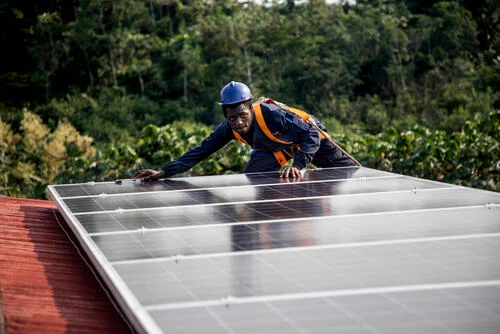
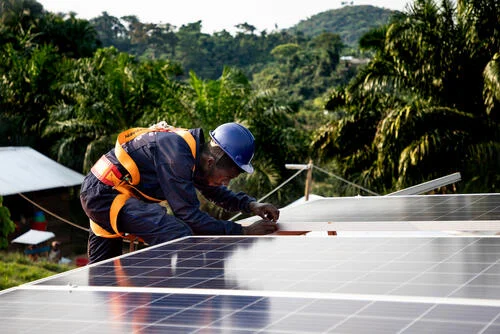
We are developing new energy solutions, such as
We are developing new energy solutions, such as using solar panels to power some of our medical activities, showing that a shift to environmentally responsible practices is possible even in low resource settings. In Kenema, Sierra Leone,…
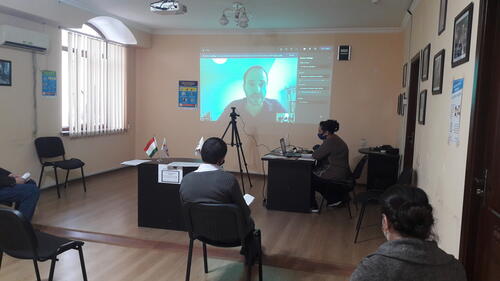
We are reducing our international travel by air,
We are reducing our international travel by air, for example attending meetings or workshops virtually rather than in person. We are also sourcing medical supplies closer to the places where we work. These changes have also accelerated b…
Our plans in reducing our carbon footprint
Read below the different plans, road maps and strategies we have – on both movement-wide and operational directorate scales – to reduce our carbon footprint.
MSF’s 2020 Environmental Pact
Climate emergency MSF’s 2020 Environmental Pact Report 29 Mar 2022
MSF commits to reduce carbon emissions to help safeguard the most vulnerable
Climate emergency MSF commits to reduce carbon emissions to help safeguard the most vulnerable Statement 29 Mar 2022
A roadmap to decarbonisation for Operational Directorate Geneva
Climate emergency A roadmap to decarbonisation for Operational Directorate Geneva msf.ch 10 Jan 2023

MSF France: une feuille de route pour la réduction de notre empreinte environnem…entale
Climate emergency MSF France: une feuille de route pour la réduction de notre empreinte environnem…entale msf.fr 23 Jun 2023

Image use and consent at MSF
Visual storytelling lies at the heart of our social mission. Our images are crucial in allowing us to bear witness to crises, inform the public, inspire action, and raise the funds that allow us to continue our lifesaving activities.
The power of an image lies in its ability to tell a story, but this cannot come at the expense of the dignity, privacy or agency of the people depicted. Our teams follow clear consent standards when creating and using images.
Image use and consent policyAI editorial policy at MSF International
How do we use AI on MSF International channels and platforms?At MSF, our communications teams working in our programme coordination offices and in the countries where we work produce the majority of the original content that is published across the digital platforms of MSF International, including this website, msf.org. However, some content is written directly by the MSF International editorial team.
This policy outlines the ways in which generative artificial intelligence (AI) may and may not be used by the MSF International editorial team in curating, editing, and publishing content to MSF International channels and platforms.